Report: 5.8 Million Knocks: A Three-Year Honeypot Record of SSH and Telnet Attacks
The geolocation maps cover every inhabited continent. 215 jurisdictions, almost all, appear in the data record as origin of unsolicited traffic. A notable exception is tightly-controlled North Korea. The densest clusters are in the eastern and central United States, Western and Central Europe, southeastern Brazil, India, eastern China, Japan and Korea, and Southeast Asia. Marker size reflects connection volume, so a large marker shows a location from which many connections originated.
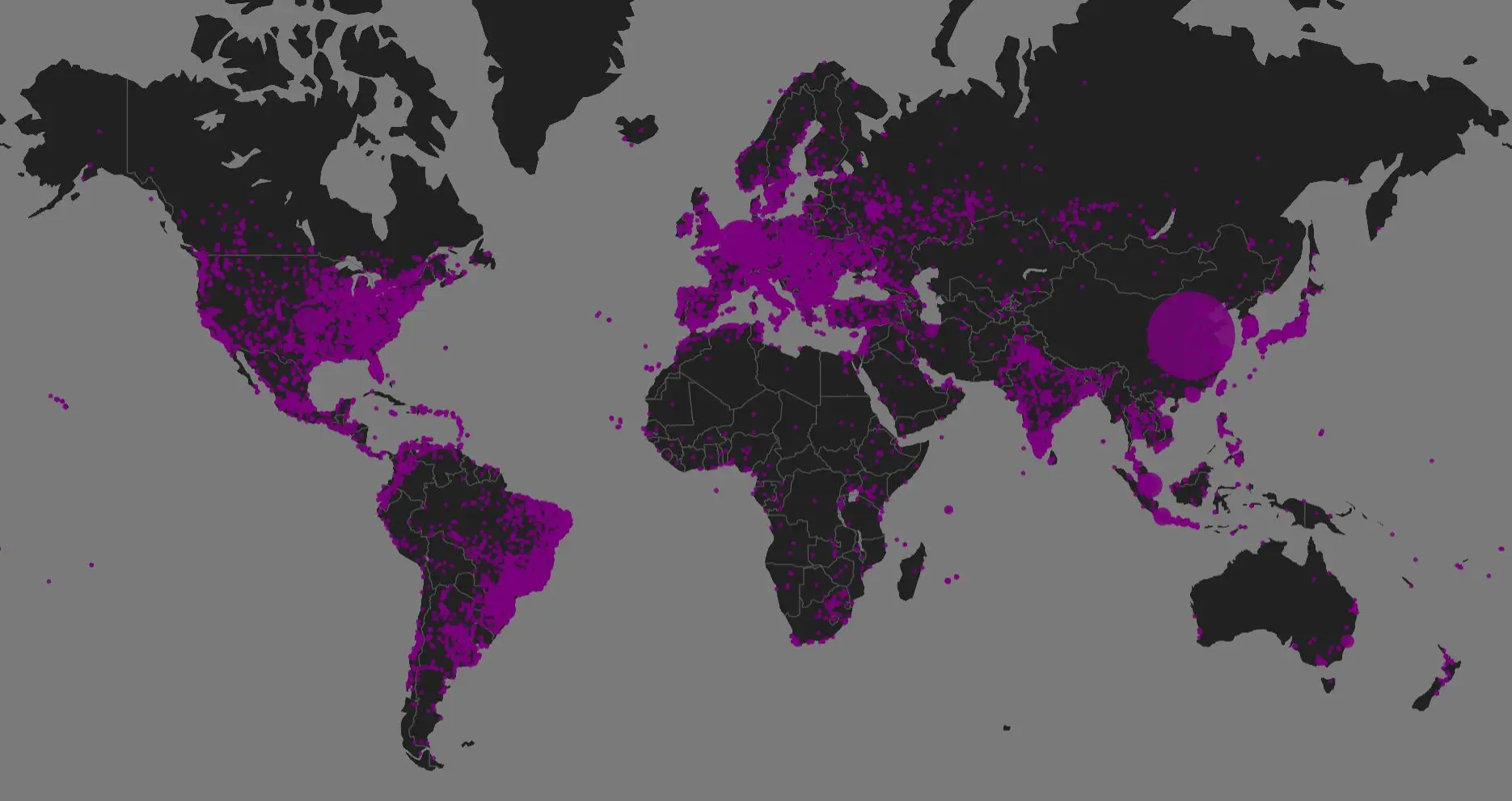
Figure 1. Geolocation of scan origins
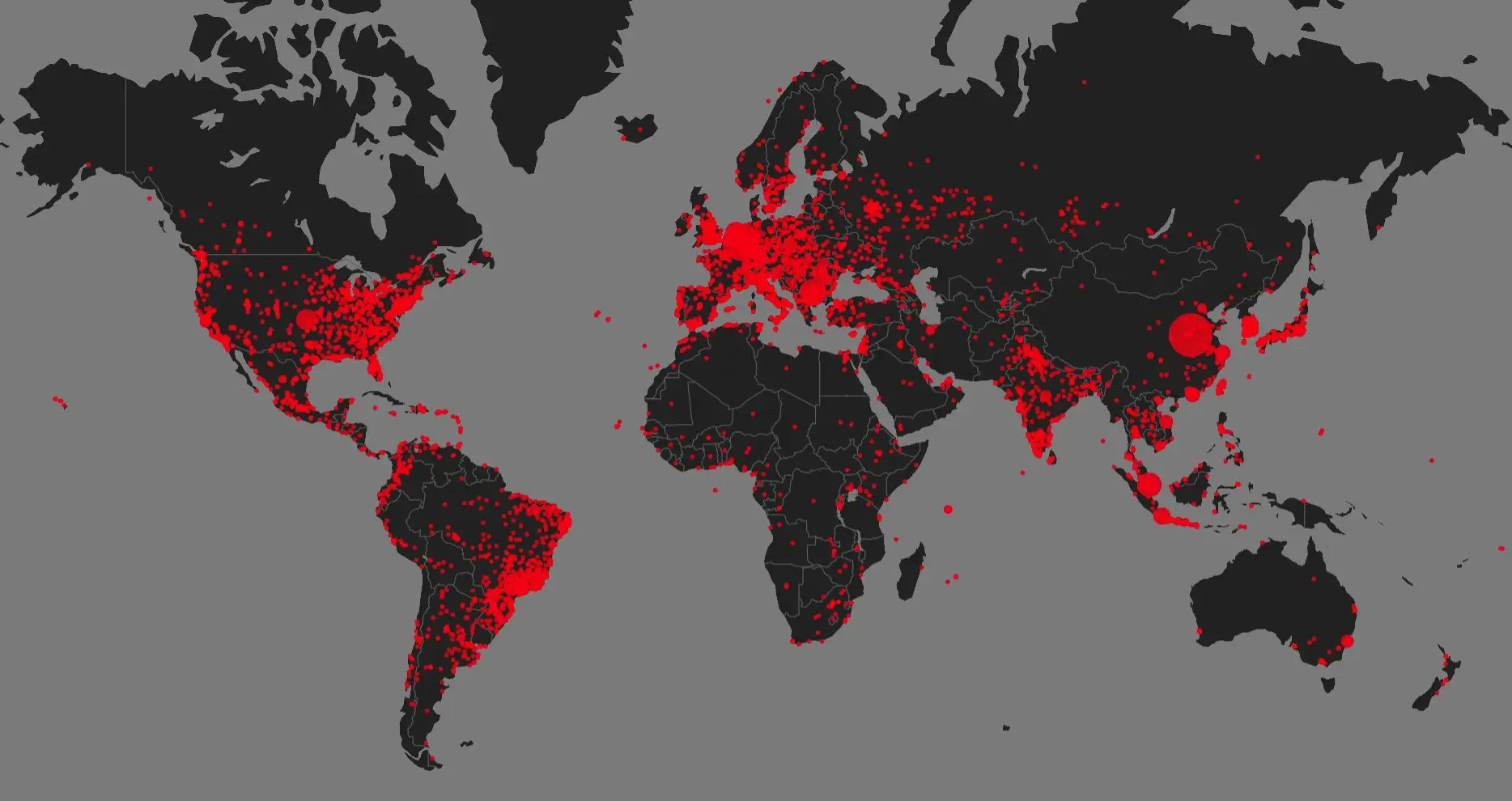
Figure 2. Geolocation of attack origins
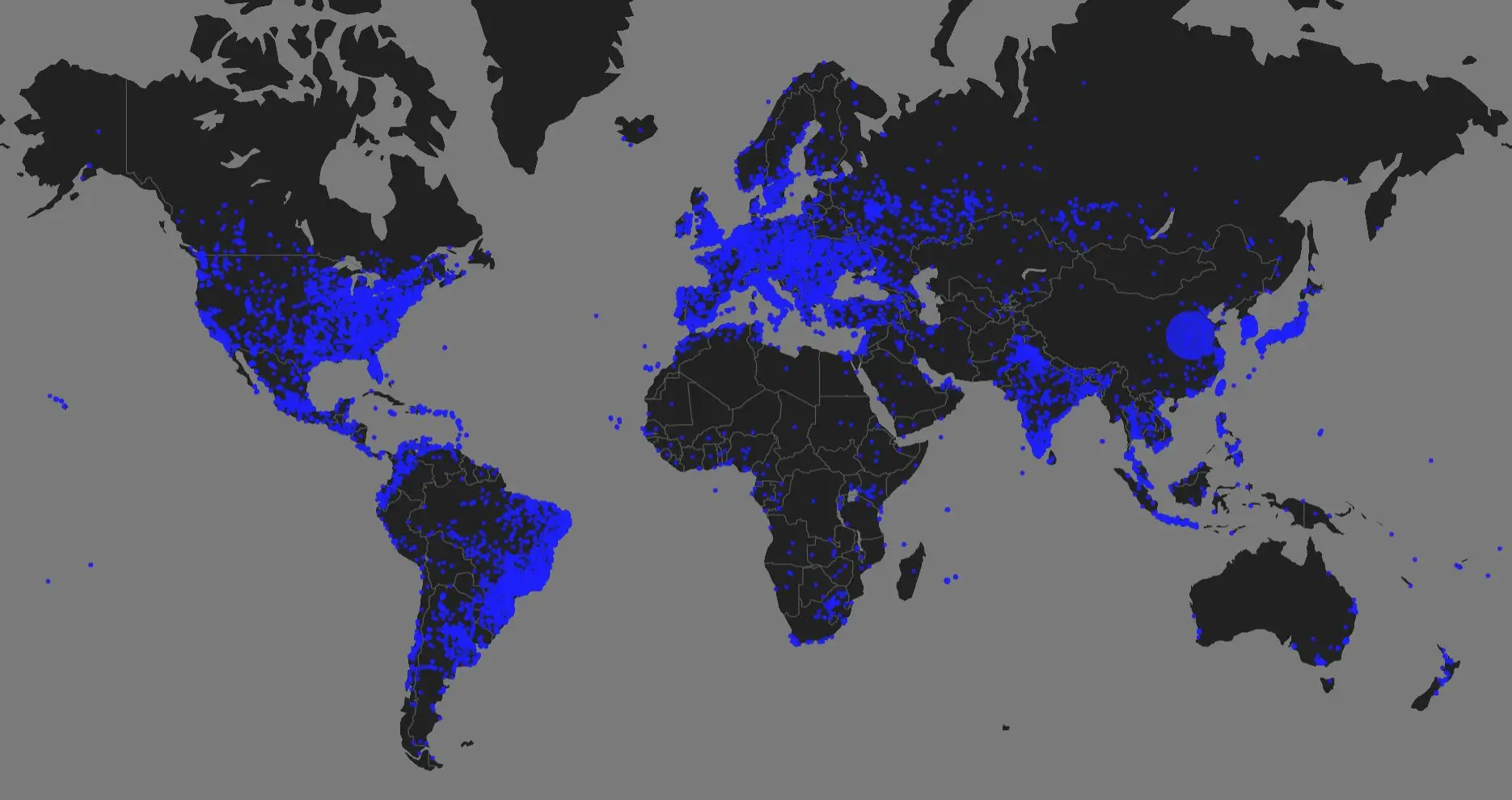
Figure 3. Geolocation of all unsolicited traffic origins
The three maps differ in ways that match the rankings above:
-
Scans (Figure 1, blue markers) are spread thinly across a very wide area, including Russia and central Asia, with one dominant marker in eastern China.
-
Attacks (Figure 2, red markers) are more concentrated. Large markers sit in eastern China, western Europe near the Netherlands and Germany, the Balkans (consistent with Bulgaria’s place in the attack-country ranking), the central United States, Indonesia, and Korea and Japan. Russia and central Asia are sparse in red. Brazilian attacks cluster in the southeast, while Brazilian scans cover the whole country.
-
All traffic (Figure 3, purple markers) combines both, with its largest marker in eastern China.
The large United States and China markers sit near the middle of each country, which fits GeoLite2 placing addresses it can locate only at country level on a single default point, which sometimes is the country centroid. Such markers therefore aggregate many addresses and do not show one busy host. Geolocation is approximate, and VPN or proxy use can hide the true origin, so country attribution should be treated as indicative.
Report: 5.8 Million Knocks: A Three-Year Honeypot Record of SSH and Telnet Attacks
Leave a Reply